
In This Article
Why GEO is an Extension, Not a Revolution
Think of AI search tools as supremely efficient, yet picky, research assistants. They scour the web not just for keywords, but for verifiable truth. They prioritize content that demonstrates:
- Authority & Trust: Established through quality backlinks and a strong site reputation.
- Semantic Richness: Deep, comprehensive coverage of a topic, answering related questions a human would ask.
- Technical Accessibility: Clean site structure and data markup that makes content easy for LLMs (Large Language Models) to parse and cite.
This means your decade-long investment in quality backlinks and in-depth content is more valuable than ever. The AI is looking for the best sources, and it’s often looking at the very same top organic results you’ve been trying to reach.
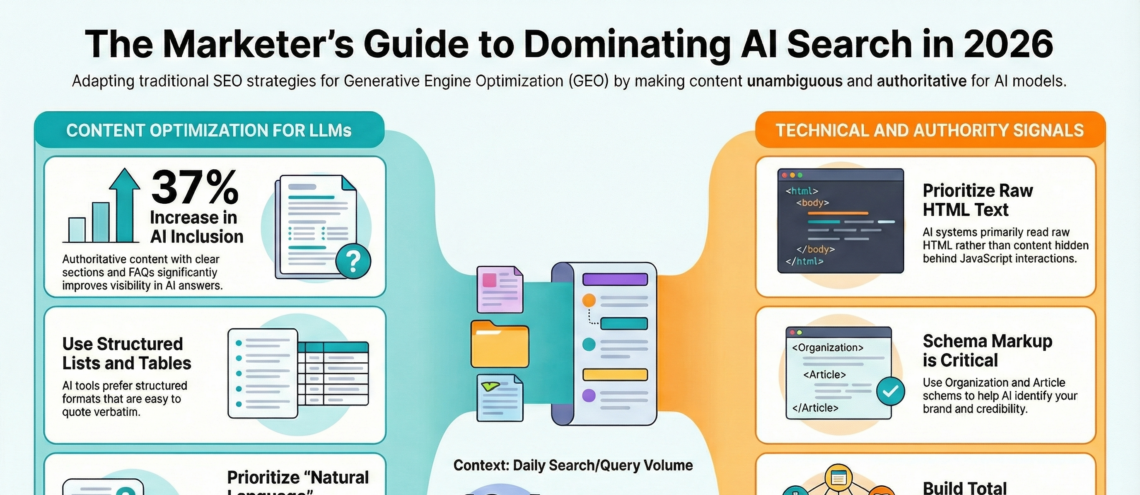
How to Optimize for the Generative Engine: A 3-Step Framework
1. Structure for Machines, Write for Humans
AI models love clear, logical structure. Use definitive headers (H1, H2, H3), bulleted lists, and concise paragraphs. Implement schema markup (like FAQPage, HowTo, or Article) to give search engines explicit clues about your content’s meaning. This makes you a more citable source.
2. Pursue Topical Authority, Not Just Keywords
Move beyond single-keyword pages. Create comprehensive content hubs that cover a subject from every angle. AI tools synthesize information; they’re more likely to pull from a single source that thoroughly explains “How to Start Running” than from five thinner articles on “best running shoes,” “running form,” etc., from different sites. Build your authority around topics, not terms.
3. Double Down on E-E-A-T (Experience, Expertise, Authoritativeness, Trustworthiness)
Google’s guidelines are now your GEO blueprint. Showcase author credentials, cite reputable sources, and provide clear evidence of first-hand experience. Content that feels authentic and expert-driven is exactly what AI systems are trained to recognize and reward.
Ready to audit your technical SEO to ensure it's GEO-ready? Our previous guide on Technical SEO Foundations is the perfect starting point to ensure your site is built for both users and machines.
The Bottom Line: The Human-Centric Core Wins
While younger generations are adopting AI search at staggering rates, the foundational principle remains unchanged. The best GEO strategy is to create high-value, human-centric content that machines can efficiently verify and cite.
Don't get distracted by the "AI" label. Focus on being the most clear, authoritative, and helpful source in your niche. Do that, and you’ll be optimized for every engine—human or generative.
Frequently Asked Questions
1. What is Generative Engine Optimization (GEO)?
GEO is the practice of optimizing your content and website to be selected and cited as a source by AI-powered search tools and large language models (LLMs) like ChatGPT, Google AI Overviews, and Microsoft Copilot.
2. Is GEO replacing traditional SEO?
No. GEO is a natural extension of SEO. The core principles of authority, relevance, and quality remain paramount. GEO focuses on how these principles apply to the new way AI models discover and present information.
3. Do I need a completely new strategy for GEO?
Not entirely. A strong traditional SEO foundation is your greatest GEO asset. The shift involves a sharper focus on semantic richness, impeccable technical structure, and establishing undeniable topical authority.
4. How do AI search tools choose which sources to cite?
They are programmed to prioritize content that demonstrates trust, authority, and clear structure. They often pull data from top-ranking organic results, favoring sources with strong backlink profiles and comprehensive information.
5. Is keyword research still important for GEO?
Yes, but it evolves. Focus shifts to "topic research" and semantic keyword clusters. Understanding the full breadth of questions users ask about a subject is more critical than targeting a single high-volume keyword.
6. What role does schema markup play in GEO?
A significant one. Schema markup (structured data) helps LLMs quickly understand the context and type of your content (e.g., FAQ, How-to guide, Article), making it easier to parse and potentially cite as a direct source.
7. Will backlinks still matter in an AI-search world?
Absolutely. Backlinks remain a primary signal of authority and trust for both traditional search engines and the AI models that are often trained on their rankings. Quality backlinks are arguably more important than ever.
8. How can I make my content more "AI-friendly"?
Write with clear headers, use concise language, structure data with tables or lists where appropriate, and ensure your site's technical health (fast loading, clean code) so content is easily crawlable and indexable.
9. Should I create content specifically for AI tools like ChatGPT?
Don't write for the AI; write for the human reader the AI is trying to help. The AI is seeking the best possible answer for its user. By creating expert-driven, helpful content for people, you naturally become a preferred source for AI.
10. Where should I start with GEO?
Audit your top-performing content for depth and structure. Ensure technical SEO is flawless. Consider building topical content clusters to establish authority. For a deep dive on the technical side, our post on Core Web Vitals and User Experience provides crucial context.